
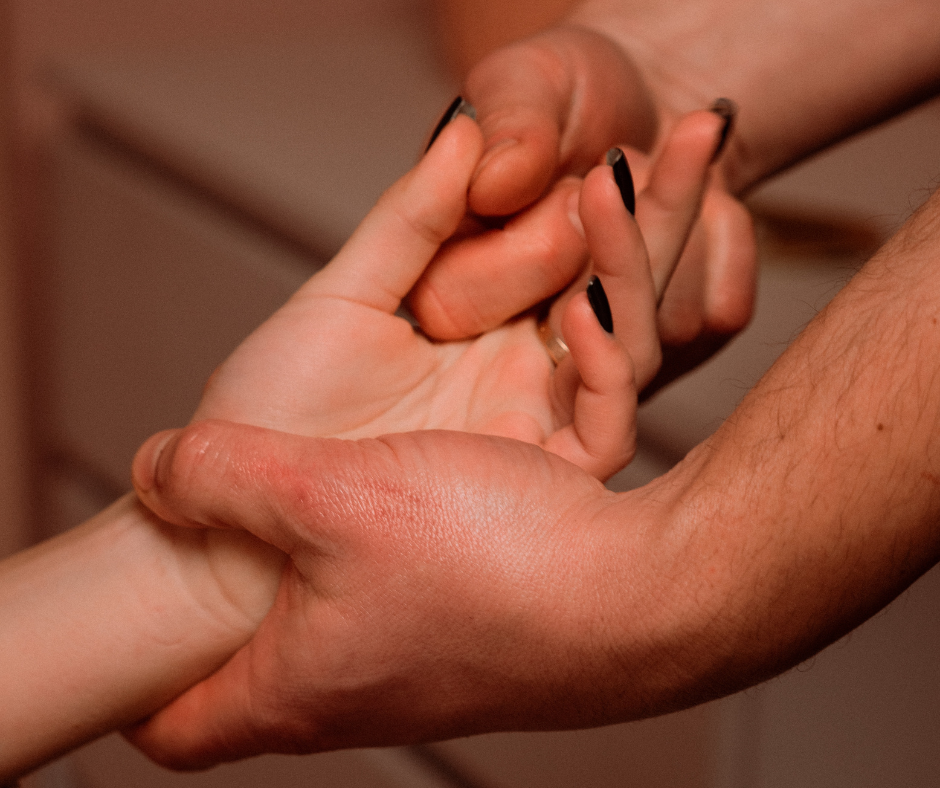
What does the science actually say about therapeutic touch? This article explores the emerging neuroscience of affective touch – the dedicated system of nerve fibres that responds to slow, gentle, skin-temperature contact. It also sets out what the best current evidence shows about its benefits for pain, anxiety and wellbeing. Written for complementary and integrative practitioners, it offers an honest, research-literate account of where the evidence is strong, where it has been overstated, and what it all means for everyday practice.
Touch is the first sense we develop in the womb and, for a great many of our members, it is the very medium through which their practice is conducted. The massage therapist, the reflexologist, the aromatherapist, the Reiki practitioner, the osteopath and the craniosacral therapist all work, in one way or another, through the hands. And yet touch is arguably the least examined of the senses when we talk about evidence. We pore over the biochemistry of botanicals and the mechanics of the musculoskeletal system, but the science of touch itself – what actually happens when one human being places their hands on another with therapeutic intent – has tended to sit in the background.
That is beginning to change, and the picture emerging from the laboratory is more interesting, and more honest, than the slogans that have circulated for years.
A second sense of touch
For most of the twentieth century, touch was understood largely as a discriminative sense – the system that tells us whether an object is rough or smooth, sharp or blunt, where on the body we have been touched and how firmly. That system is fast, precise and carried by thickly insulated nerve fibres. It is the touch of picking up a coin or reading Braille.
Over the past two decades, however, neuroscientists have characterised a second, quite different touch system. A class of slow, unmyelinated nerve fibres known as C-tactile afferents, found in the hairy skin that covers most of the body, responds with notable enthusiasm to one very particular kind of stimulation: gentle stroking, at roughly skin temperature, moving at an unhurried pace of around one to ten centimetres per second. In the landmark review by McGlone, Wessberg and Olausson, these fibres are proposed as the biological substrate of affective touch – touch that is registered not primarily as information, but as emotion.1
The detail that should interest every hands-on practitioner is where these signals travel. Discriminative touch is routed to the somatosensory cortex, the brain’s map of where and what. Affective touch, by contrast, projects strongly to the insular cortex – a region bound up with emotion, interoception and our felt sense of the body. The nervous system, in other words, appears to have a dedicated pathway for the slow, warm, attentive contact that sits at the heart of so much complementary practice. The speed at which skilled practitioners instinctively work – rhythmic, measured, attentive – turns out to map almost exactly onto the stimulus these fibres prefer.
What the evidence shows – and where it stops
Here is where honesty matters, because the science of touch has at times been oversold, and our credibility as a profession depends on claiming neither more nor less than the evidence supports.
The strongest evidence concerns the very young. A large randomised controlled trial published in the New England Journal of Medicine found that immediate skin-to-skin “kangaroo mother care” for low-birth-weight infants reduced neonatal mortality by around a quarter compared with conventional incubator care – a result so clear that the trial was halted early.2 This is touch as a life-saving intervention, and it is about as robust as clinical evidence gets.
For older children and adults, the most comprehensive synthesis to date is a 2024 systematic review and meta-analysis in Nature Human Behaviour, drawing on 137 studies and almost thirteen thousand people. It found medium-sized, reliable benefits of touch interventions across both mental and physical health – meaningful reductions in pain, anxiety and depressive feelings among them.3 These are not extravagant effects, but they are consistent, and consistency is precisely what we should value.
Now for the necessary corrective. For years, the benefits of massage were widely attributed to a single mechanism: that it lowers the stress hormone cortisol. It is a tidy story, and it is largely wrong, at least for adults. A careful quantitative review concluded that massage’s effect on cortisol in adults is small and, in most cases, statistically indistinguishable from zero. Therefore, it cannot be the cause of massage’s genuine and well-established benefits for anxiety, depression and pain.4
The benefits are real; the popular explanation for them is not. The cortisol picture does appear stronger in newborns specifically, which is consistent with the kangaroo-care findings – a reminder that what works, in whom, and why rarely reduces to a single sentence.
I dwell on this because it is exactly the kind of distinction that earns us respect in interprofessional settings. A practitioner who says that touch reliably reduces pain and anxiety, though the mechanism is more subtle than the cortisol story suggests, is far more credible – to a sceptical GP, to a regulator, to a thoughtful client – than one who repeats a claim the literature has long since corrected.
Why this matters for your practice
Several practical implications follow.
It dignifies the work. The slow, attentive, skin-temperature contact that characterises skilled bodywork is not incidental to its effect – it appears to be precisely the stimulus a dedicated neural system evolved to register. When you work in a measured, rhythmic way, you are not merely being gentle; you are speaking the native language of the affective touch system.
It sharpens how we describe what we do. We can say, accurately and with confidence, that touch has measurable benefits for pain and mood, supported by large and recent syntheses. We can also model sound research literacy by being candid about the limits – that effect sizes are moderate, that mechanisms are still being worked out, and that the strongest evidence sits at the extremes of life, in the newborn and the seriously unwell.
It underscores the ethical weight of touch. A sense with a direct line to the emotional brain is a powerful thing, and powerful things require care. Consent, clear communication, cultural sensitivity and impeccable professional boundaries are not bureaucratic add-ons; they are the conditions under which touch becomes therapeutic rather than intrusive. The same fibres that can convey safety and care can, in the wrong context, convey threat.
A closing thought
There is something rather moving in all of this. The instinct to lay a hand on someone who is suffering is among the oldest we have – older than any of our modalities, older than medicine itself. What the laboratory is now showing is that this instinct was, in a sense, well founded: the human body comes equipped with a system attuned to exactly this kind of care.
Our task as a profession is to honour both halves of that truth – the ancient wisdom of touch, and the modern obligation to describe its effects accurately. Claim what the evidence supports, hold the rest lightly, and keep your hands, and your standards, steady.
Reflective Practice CMA CPD
From reading to reflection
Reading is a learning activity; reflection is what turns it into continuing professional development. Use the prompts below to record a short, honest reflection for your CPD portfolio. There are no model answers – the value lies in connecting the evidence to your own practice.
- How do I currently describe the benefits of therapeutic touch to my clients – and does that language match what the evidence actually supports? Is there anything I would now phrase differently?
- The affective touch system responds best to slow, warm, attentive contact (around one to ten centimetres per second). Where does my pace and pressure already align with this – and where might I adjust?
- The article notes that the popular “massage lowers cortisol” explanation does not hold up in adults. Have I ever relied on a mechanism or claim I had not checked against current evidence? How will I keep my claims accurate in future?
- Touch has a direct line to the emotional brain. How do I currently handle consent, communication, cultural sensitivity and boundaries around touch – and is there one aspect I could strengthen?
- How would I explain the value of my work to a sceptical GP or other health professional, in a way that is both confident and scrupulously evidence-honest?
One change I will make in my practice: …
Tip: record the date, the activity (reading this article), your key insight and any change to practice. A few honest sentences are exactly what we are looking for here at The Complementary Medical Association. Remember that you can upload your CPD activity to the CMA CPD portal via your CMA website membership login. This activity is valued at one hour of CMA CPD. this activity is valued at one hour of CMA CPD.
Frequently asked questions
What is affective touch?
Affective touch is the emotional dimension of the sense of touch. It is carried by a class of slow nerve fibres called C-tactile afferents, found in the hairy skin across most of the body, which respond most strongly to gentle, skin-temperature stroking at around one to ten centimetres per second. Unlike the fast, precise touch we use to identify objects, affective touch projects to brain regions involved in emotion and our felt sense of the body.1
Does massage really reduce cortisol?
Not as reliably as is often claimed. A careful quantitative review found that, in adults, massage’s effect on the stress hormone cortisol is small and usually not statistically significant – so it cannot be the main reason massage helps with pain, anxiety and low mood.4 The benefits of massage are well established; the popular cortisol explanation simply does not account for them. The cortisol effect does appear stronger in newborns specifically.
What does the evidence say about the benefits of touch therapies?
The most comprehensive synthesis to date, a 2024 meta-analysis of 137 studies and almost thirteen thousand people, found medium-sized and consistent benefits of touch interventions for both physical and mental health, including reductions in pain, anxiety and depressive feelings.3 The strongest single body of evidence concerns skin-to-skin care for low-birth-weight newborns, which a major trial has shown can reduce mortality.2
Is there an ideal pace or pressure for therapeutic touch?
Research on the affective touch system points to slow, gentle, skin-temperature contact – roughly one to ten centimetres per second – as the stimulus these specialised nerve fibres respond to most strongly.1 This describes how to engage one particular system rather than a prescription for every technique; pressure and pace should always be guided by the individual client, the modality and the therapeutic goal.
How should practitioners handle consent and boundaries around touch?
Because affective touch has a direct line to the emotional brain, it carries real psychological weight. Clear, ongoing consent, sensitive communication, cultural awareness and firm professional boundaries are essential – they are the conditions under which touch is experienced as safe and therapeutic rather than intrusive.
How can I explain the value of touch therapy to a sceptical GP?
Claim exactly what the evidence supports, and no more. You can state with confidence that touch interventions have measurable, peer-reviewed benefits for pain and mood, citing recent large syntheses, while being candid that effect sizes are moderate and mechanisms are still being clarified. This research-literate honesty tends to earn more respect from medical colleagues than overstated claims.3
References
- McGlone, F., Wessberg, J. & Olausson, H. (2014) Discriminative and affective touch: sensing and feeling. Neuron, 82(4), 737–755. https://doi.org/10.1016/j.neuron.2014.05.001
- WHO Immediate KMC Study Group (2021) Immediate “kangaroo mother care” and survival of infants with low birth weight. New England Journal of Medicine, 384(21), 2028–2038. https://doi.org/10.1056/NEJMoa2026486
- Packheiser, J., Hartmann, H., Fredriksen, K., Gazzola, V., Keysers, C. & Michon, F. (2024) A systematic review and multivariate meta-analysis of the physical and mental health benefits of touch interventions. Nature Human Behaviour, 8, 1088–1107. https://doi.org/10.1038/s41562-024-01841-8
- Moyer, C.A., Seefeldt, L., Mann, E.S. & Jackley, L.M. (2011) Does massage therapy reduce cortisol? A comprehensive quantitative review. Journal of Bodywork and Movement Therapies, 15(1), 3–14. https://doi.org/10.1016/j.jbmt.2010.06.001
Further reading is available here on the Complementary Medical Association site. Please check our Learn section (access this at the top of the page in the menu), and you’ll be able to read about a wide variety of conditions, therapies, remedies and much more.
About the Author
Jayney Goddard MSc, PG Dip Ed, FCMA, FRSM is the Founder and President of The Complementary Medical Association (The CMA), the professional standards body she has led for more than three decades. A writer, speaker and thought leader in complementary and integrative medicine, natural health and longevity, she is known for an honest, evidence-grounded approach – one that flags confidence levels candidly, resists wellness hype, and champions the research literacy she believes the profession deserves.
Through The CMA and her own writing at jayneygoddard.org, Jayney works to raise standards across the field and to give practitioners the credibility, support and tools they need to flourish. She writes regularly on the science behind complementary practice, translating emerging research into clear, practical guidance for clinicians and the people they care for.