
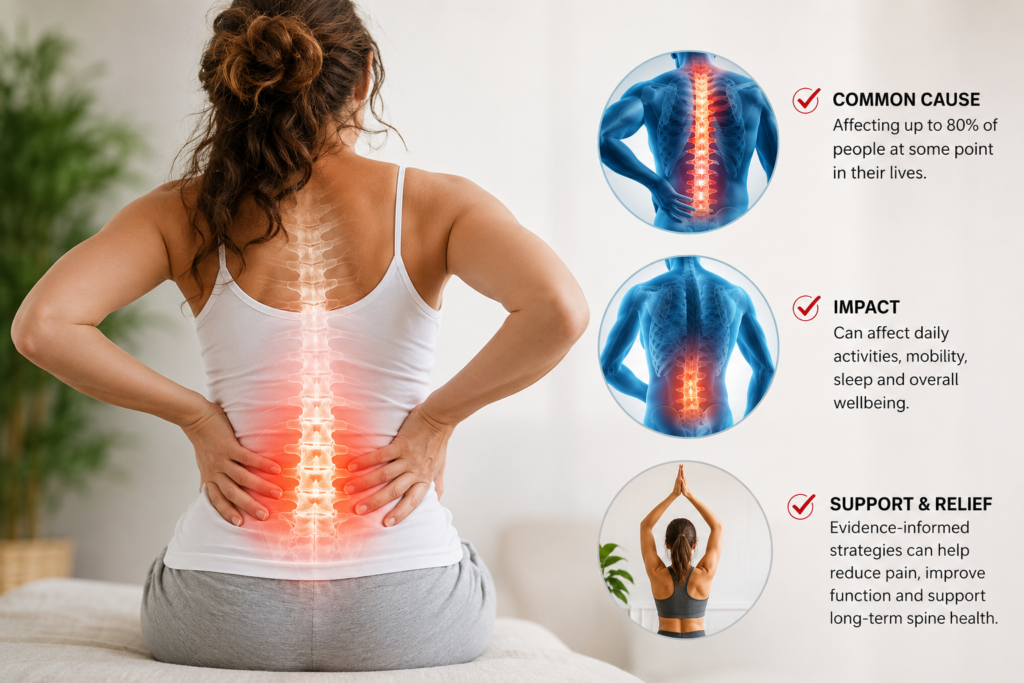
Back Pain – CMA Clinical Spotlight by Dr Amrita Singh
What is back pain?
Back pain is discomfort, aching, stiffness, tension, or pain felt anywhere along the back, most commonly in the lower back. It may be mild or severe, short-term or long-term, and can affect movement, posture, sleep, work, and daily activities (Mayo Clinic, 2018).
Back pain is very common and can affect people of all ages. It may develop suddenly after lifting, twisting, injury, or poor posture, or it may come on gradually without one clear cause. In many cases, back pain improves with time, gentle movement, and self-care (NHS, 2022; Cleveland Clinic, 2022).
The pain may feel like a dull ache, muscle tightness, stiffness, sharp pain, burning pain, or shooting pain. Sometimes pain may travel from the lower back into the buttock or leg, especially when a nerve is irritated or compressed, as seen in sciatica (Mayo Clinic, 2018).
Back pain may be linked to muscles, ligaments, discs, joints, nerves, posture, or underlying conditions. Common examples include muscle strain, ligament sprain, slipped disc, sciatica, arthritis, or inflammatory conditions such as ankylosing spondylitis (NHS, 2022; Cleveland Clinic, 2022).
Although most back pain is not caused by a serious disease, some symptoms need urgent medical attention, such as pain after major injury, weakness or numbness in the legs, loss of bladder or bowel control, fever, unexplained weight loss, or pain that is severe, worsening, or does not improve (NHS, 2022; Mayo Clinic, 2018).
Causes
Back pain can have many causes, and in many cases there is no single clear underlying disease or injury. It may develop due to strain, posture, movement patterns, lifestyle factors, age-related changes, or irritation of muscles, joints, discs, or nerves (NHS, 2022).
One of the most common causes is muscle or ligament strain, which may occur after lifting something heavy, twisting awkwardly, sudden movement, overuse, poor posture, or prolonged sitting. This type of pain may feel like aching, stiffness, spasm, or tightness in the back muscles (Mayo Clinic, 2018; Cleveland Clinic, 2022).
Back pain may also be caused by problems involving the spinal discs, which act as cushions between the bones of the spine. A slipped, bulging, or herniated disc may irritate nearby nerves and cause pain that travels into the buttock, thigh, leg, or foot, commonly known as sciatica (Wikipedia, 2019; NIAMS, 2019).
Arthritis and age-related spinal changes can also contribute to back pain. Osteoarthritis may affect the joints of the spine, while narrowing of the spinal canal, known as spinal stenosis, may place pressure on nerves and cause pain, numbness, or weakness in the legs (Mayo Clinic, 2018; Cleveland Clinic, 2022).
Other possible causes include injury, falls, fractures, poor posture, reduced physical activity, obesity, pregnancy, inflammatory conditions, infections, kidney problems, or rarely cancer. Emotional stress may also increase muscle tension and make pain feel worse or harder to manage (NHS, 2022; Mayo Clinic, 2018).
Signs and symptoms
The signs and symptoms of back pain can vary depending on the cause, severity, duration, and whether nerves are involved. Pain may be felt in the upper, middle, or lower back, although lower back pain is the most common (NHS, 2022; Cleveland Clinic, 2022).
Back pain may feel like a dull ache, stiffness, tightness, sharp pain, burning sensation, or muscle spasm. Some people may find that the pain becomes worse with bending, lifting, twisting, sitting for long periods, standing, walking, or certain movements (Mayo Clinic, 2018).
Common symptoms may include reduced flexibility, difficulty standing upright, muscle tightness, restricted movement, tenderness, or pain that improves with rest or gentle movement. In some cases, pain may interfere with sleep, work, exercise, or daily activities (NHS, 2022; Cleveland Clinic, 2022).
If a nerve is irritated or compressed, pain may travel from the lower back into the buttock, thigh, leg, or foot. This may be associated with tingling, numbness, pins and needles, or weakness, and is commonly seen in sciatica (Mayo Clinic, 2018).
Some symptoms may suggest a more serious underlying problem and need urgent medical assessment. These include loss of bladder or bowel control, numbness around the genitals or buttocks, weakness in both legs, fever, unexplained weight loss, pain after major injury, history of cancer, or severe pain that is worsening or does not improve (NHS, 2022; Mayo Clinic, 2018).
Risk factors
Several factors may increase the risk of developing back pain, although it can occur in anyone and may sometimes appear without an obvious cause. Risk can be influenced by age, lifestyle, occupation, posture, physical fitness, body weight, injury history, and underlying health conditions (NHS, 2022; Mayo Clinic, 2018).
Age is an important risk factor, as back pain becomes more common with increasing age. Age-related changes in the spine, discs, joints, and muscles may contribute to stiffness, reduced flexibility, arthritis, disc problems, or spinal narrowing (Mayo Clinic, 2018; Cleveland Clinic, 2022).
Poor physical fitness, weak core muscles, and reduced activity may increase the risk of back pain because the spine has less muscular support. On the other hand, sudden intense activity, heavy lifting, repetitive bending, or twisting can also strain the back, especially when the body is not conditioned for it (Cleveland Clinic, 2022).
Occupational factors may also contribute. Jobs involving heavy lifting, prolonged sitting, driving, standing, vibration, awkward posture, or repetitive movements may place strain on the back and increase the likelihood of pain (NHS, 2022).
Excess body weight can place additional mechanical stress on the spine and surrounding muscles, increasing the risk of lower back pain. Pregnancy may also contribute due to changes in posture, weight distribution, hormones, and pressure on the spine (Mayo Clinic, 2018; Cleveland Clinic, 2022).
Other risk factors include previous back injury, smoking, stress, anxiety, depression, poor sleep, inflammatory conditions, arthritis, osteoporosis, and some medical conditions. Psychological stress may increase muscle tension and influence pain perception, making back pain feel more persistent or difficult to manage (Mayo Clinic, 2018).
Stages
Back pain can be described in different ways depending on its duration, location, cause, and whether nerve symptoms are present. It is not always divided into fixed “stages,” but classification helps guide assessment and management (NHS, 2022).
- Acute back pain
Acute back pain usually lasts for a short period, often a few days to a few weeks. It may occur suddenly after lifting, twisting, overuse, injury, or poor posture. In many cases, it improves with gentle movement, self-care, and time (NHS, 2022; Mayo Clinic, 2018). - Subacute back pain
Subacute back pain lasts longer than acute pain but has not yet become long-term. It may continue for several weeks and may need closer attention if symptoms are not improving, daily activities are restricted, or pain keeps returning (NICE, 2016). - Chronic back pain
Chronic back pain usually refers to pain that persists for 12 weeks or longer. It may be linked to ongoing muscle tension, disc problems, arthritis, posture, reduced activity, stress, or pain sensitisation. Chronic back pain can affect sleep, mood, work, mobility, and quality of life (Cleveland Clinic, 2022; Mayo Clinic, 2018). - Non-specific back pain
This is the most common type of back pain. It means there is no clear serious underlying disease or specific structural cause identified. It may be related to muscles, ligaments, joints, posture, activity patterns, or lifestyle factors (NHS, 2022). - Back pain with sciatica
Back pain with sciatica occurs when pain travels from the lower back into the buttock, leg, or foot due to irritation or compression of a nerve. It may be associated with tingling, numbness, pins and needles, or weakness (Mayo Clinic, 2018). - Mechanical back pain
Mechanical back pain is related to the movement and structure of the spine, muscles, discs, joints, or ligaments. It may be worse with certain movements, lifting, bending, sitting, or standing, and may improve with rest or gentle activity (Cleveland Clinic, 2022). - Inflammatory back pain
Inflammatory back pain may be associated with conditions such as ankylosing spondylitis. It often causes stiffness, may be worse after rest or in the morning, and may improve with movement. Persistent inflammatory-type symptoms may need medical assessment (NHS, 2022). - Serious or red-flag back pain
A small number of cases may be linked to serious causes such as fracture, infection, cancer, cauda equina syndrome, or significant nerve compression. Symptoms such as loss of bladder or bowel control, numbness around the genitals or buttocks, weakness in both legs, fever, unexplained weight loss, or pain after major injury require urgent medical attention (NHS, 2022; Mayo Clinic, 2018).
Complications
Back pain can lead to several complications, especially when it is severe, recurrent, persistent, or associated with nerve involvement. While many cases improve with time and self-care, ongoing pain may affect movement, sleep, work, mood, and overall quality of life (NHS, 2022; Mayo Clinic, 2018).
One common complication is reduced mobility. Pain, stiffness, muscle spasm, or fear of movement may make it difficult to bend, lift, walk, sit, stand, or carry out daily activities. Over time, reduced activity can lead to muscle weakness, poorer posture, and reduced physical confidence (Cleveland Clinic, 2022).
Back pain may also interfere with sleep, especially when pain worsens at night or when changing position in bed. Poor sleep can increase fatigue, irritability, low mood, and pain sensitivity, creating a cycle where pain and tiredness make each other worse (Mayo Clinic, 2018).
If a nerve is compressed or irritated, as in sciatica, complications may include pain travelling into the leg, numbness, tingling, pins and needles, weakness, and reduced ability to walk or function normally. Persistent or worsening nerve symptoms may need medical assessment (Mayo Clinic, 2018).
Long-term back pain may affect work, independence, exercise, social life, and emotional wellbeing. Some people may develop anxiety, frustration, low mood, or fear of re-injury, particularly if the pain keeps returning or limits daily responsibilities (Cleveland Clinic, 2022).
Rare but serious complications may occur if back pain is caused by conditions such as cauda equina syndrome, fracture, infection, cancer, or severe nerve compression. Symptoms such as loss of bladder or bowel control, numbness around the genitals or buttocks, weakness in both legs, fever, unexplained weight loss, or severe pain after injury require urgent medical attention (NHS, 2022; Mayo Clinic, 2018).
Prognosis
The prognosis of back pain is generally good, especially when the pain is short-term and not linked to a serious underlying condition. Many cases of acute back pain improve within a few weeks with gentle movement, self-care, and gradual return to normal activities (NHS, 2022; Mayo Clinic, 2018).
For some individuals, back pain may become recurrent or persistent, especially when there are ongoing risk factors such as poor posture, weak core muscles, heavy lifting, prolonged sitting, excess body weight, stress, poor sleep, or previous back injury (Cleveland Clinic, 2022).
The outlook depends on the cause, severity, duration, lifestyle factors, nerve involvement, and response to treatment. Non-specific mechanical back pain often improves well, while back pain associated with sciatica, arthritis, spinal stenosis, inflammatory disease, or long-term pain patterns may require more structured management (NICE, 2016).
Maintaining activity is usually important for recovery. Prolonged bed rest may delay improvement, whereas gentle movement, stretching, strengthening exercises, posture awareness, and gradual return to daily activities may support recovery and reduce recurrence (NHS, 2022; Cleveland Clinic, 2022).
Chronic back pain may affect mobility, sleep, mood, work, and quality of life, but many people can still improve function with a combined approach that includes exercise, physiotherapy, pain management, psychological support, lifestyle changes, and self-management strategies (Mayo Clinic, 2018).
The prognosis is more concerning when back pain is associated with red-flag symptoms, such as loss of bladder or bowel control, numbness around the genitals or buttocks, weakness in both legs, fever, unexplained weight loss, history of cancer, or severe pain after injury. These symptoms require urgent medical assessment (NHS, 2022; Mayo Clinic, 2018).
Nutritional perspective
Nutrition can play a supportive role in back pain management, particularly by helping to maintain a healthy body weight, support muscle and bone health, reduce inflammation, and improve overall energy and recovery. While diet alone cannot treat all causes of back pain, balanced nutrition can contribute to better mobility, resilience, and long-term spinal health.
Maintaining a healthy body weight is important because excess weight can place additional strain on the spine, lower back muscles, hips, and joints. Weight management may help reduce mechanical pressure on the back and improve ease of movement, especially in people with recurrent or chronic lower back pain.
Adequate protein intake supports muscle strength, repair, and maintenance. Strong back, abdominal, hip, and leg muscles help support posture and spinal stability. Protein sources may include lentils, beans, pulses, eggs, fish, lean meat, dairy products, tofu, nuts, and seeds.
Bone health is also important in back pain, especially where osteoporosis, fractures, ageing, or reduced mobility are concerns. Nutrients such as calcium, vitamin D, magnesium, and vitamin K support bone strength and musculoskeletal health. Sources may include dairy products, fortified foods, leafy green vegetables, nuts, seeds, pulses, and safe sunlight exposure where appropriate.
An anti-inflammatory dietary pattern may be helpful for general musculoskeletal wellbeing. This includes fruits, vegetables, whole grains, oily fish, nuts, seeds, olive oil, herbs, and spices, while reducing excessive ultra-processed foods, refined sugar, trans fats, and excess alcohol. Good hydration may also support muscle function and reduce general stiffness or fatigue.
For individuals with chronic back pain, nutritional support should be individualised, especially if there is excess weight, poor appetite, low vitamin D, osteoporosis risk, inflammatory disease, diabetes, or reduced physical activity. Overall, the nutritional approach focuses on supporting healthy weight, muscle strength, bone health, inflammation balance, energy, and long-term mobility.
Psychological perspective
Back pain can have a significant psychological and emotional impact, especially when it is persistent, recurrent, or limits daily movement. Ongoing pain may affect mood, confidence, sleep, work, relationships, and quality of life (NHS, 2022).
People with back pain may experience frustration, anxiety, low mood, irritability, fear of movement, or fear of re-injury. When pain becomes associated with bending, lifting, walking, or daily activities, some individuals may begin avoiding movement, which can reduce confidence and contribute to stiffness, weakness, and further limitation (Cleveland Clinic, 2022).
Chronic back pain can also affect a person’s sense of independence and identity. Difficulty working, exercising, caring for family, sleeping comfortably, or maintaining usual routines may lead to emotional fatigue and social withdrawal. Pain may feel more difficult to manage when stress levels are high or sleep is poor (Mayo Clinic, 2018).
Psychological support focuses on reassurance, self-management, pacing, stress reduction, relaxation, graded activity, and rebuilding confidence in movement. Cognitive and behavioural strategies may help individuals understand pain patterns, reduce fear-based avoidance, and gradually return to meaningful activities (Wikipedia, 2019; NIAMS, 2019).
A whole-person approach recognises that back pain is not only a physical experience but also affects emotional wellbeing, daily function, confidence, and lifestyle. Supporting both the body and mind can help improve resilience, movement, coping, and long-term quality of life.
Homeopathic perspective
From a homeopathic perspective, back pain may be understood by looking at the individual’s complete symptom picture rather than only the location of pain. The assessment may include the nature of the pain, the area affected, possible triggers, posture, movement pattern, stiffness, emotional stress, sleep, lifestyle, and the person’s overall constitution.
Homeopathic assessment is highly individualised. Attention may be given to whether the pain is sharp, dull, aching, burning, cramping, pulling, or shooting; whether it is worse from bending, lifting, sitting, standing, walking, cold, damp weather, rest, or overexertion; and whether it improves with warmth, gentle movement, pressure, lying down, stretching, or rest.
Back pain may also be considered in relation to the person’s general health and daily life. For example, long working hours, poor posture, emotional stress, fatigue, weight changes, lack of movement, previous injury, or recurrent strain may all contribute to the overall pattern. In cases where pain affects confidence, sleep, mood, or independence, emotional wellbeing is also an important part of care.
Supportive homeopathic care may focus on comfort, mobility, flexibility, muscular relaxation, resilience, and overall quality of life. It may be used alongside posture awareness, gentle movement, stretching, strengthening exercises, nutritional support, stress management, and appropriate rest.
Because back pain can occasionally be linked with serious conditions, symptoms such as loss of bladder or bowel control, numbness around the genitals or buttocks, weakness in both legs, fever, unexplained weight loss, severe pain after injury, or worsening neurological symptoms should be referred for urgent medical assessment.
Summary
Back pain is a common condition that can cause pain, stiffness, muscle tightness, reduced movement, and difficulty with daily activities. It may affect the upper, middle, or lower back, although lower back pain is the most common. The pain may be mild or severe, short-term or long-term, and may sometimes travel into the buttock or leg if a nerve is irritated.
Back pain can be caused by muscle or ligament strain, poor posture, heavy lifting, prolonged sitting, disc problems, sciatica, arthritis, spinal changes, injury, pregnancy, or inflammatory conditions. In many cases, there is no single clear cause, and physical, lifestyle, occupational, and psychological factors may all contribute.
It may be classified as acute, subacute, or chronic, depending on duration. It may also be described as non-specific back pain, mechanical back pain, inflammatory back pain, or back pain with sciatica. Most cases improve with time, gentle movement, self-care, and gradual return to normal activities.
Risk factors include age, poor physical fitness, weak core muscles, excess body weight, previous injury, heavy lifting, prolonged sitting, repetitive movements, smoking, stress, anxiety, poor sleep, and underlying conditions such as arthritis or osteoporosis.
Complications may include reduced mobility, poor sleep, muscle weakness, fear of movement, work limitations, emotional distress, sciatica symptoms, and reduced quality of life. Rarely, back pain may be linked to serious conditions such as fracture, infection, cancer, cauda equina syndrome, or severe nerve compression.
A comprehensive approach includes movement, posture awareness, strengthening exercises, weight management, nutritional support, stress reduction, psychological support, and holistic care. Red-flag symptoms such as loss of bladder or bowel control, numbness around the genitals or buttocks, weakness in both legs, fever, unexplained weight loss, or severe pain after injury require urgent medical assessment.
Reflective Practice – CMA CPD
This article is valued at one hour of CMA/CPD. Look into your membership portal here on The CMA site to upload the work that you have done associated with this article.
- Back pain is one of the most common reasons clients seek complementary care. How confident am I in recognising the red-flag symptoms described in this article — such as loss of bladder or bowel control, saddle numbness, bilateral leg weakness, fever, or unexplained weight loss — and do I know exactly what I would do if a client presented with one of them?
- Fear of movement can be as limiting as the pain itself. How do I currently talk to clients about staying active, and could anything in my language unintentionally encourage avoidance or over-caution?
- This article highlights how sleep, stress, mood, body weight, and occupation all influence back pain. How thoroughly does my current intake and case-taking process explore these wider factors, and where could it go deeper?
- Think of a client with recurrent or chronic back pain whom I have supported. Looking at the whole-person perspectives presented here — nutritional, psychological, and constitutional — is there an element I might weave into my approach if I saw them again today?
- Back pain often calls for collaboration. How comfortable am I referring on to, or working alongside, GPs, physiotherapists, and other practitioners — and is there one professional relationship I could strengthen to serve these clients better?
One change I will make: As a result of reading this article, one change I will make in my practice is…
CPD tip: Record the date, the article title, your reflections, and your intended change in your CPD log. This article contributes one hour towards your annual CMA CPD requirement.
References
Clinic, C. (2022). Back Pain Causes, Treatment & Pain Relief. In Cleveland Clinic. https://my.clevelandclinic.org/health/symptoms/back-pain
Mayo Clinic. (2018). Back pain. In Mayo Clinic. Mayo Clinic. https://www.mayoclinic.org/diseases-conditions/back-pain/symptoms-causes/syc-20369906
NHS . (2022). Back pain. In NHS. https://www.nhs.uk/conditions/back-pain/
NIAMS. (2019). Back Pain. In National Institute of Arthritis and Musculoskeletal and Skin Diseases. https://www.niams.nih.gov/health-topics/back-pain
Wikipedia Contributors. (2019). Back pain. In Wikipedia. Wikimedia Foundation. https://en.wikipedia.org/wiki/Back_pain
Learn more about a variety of conditions and their treatments using a variety of complementary and integrative medical approaches in our “Learn About” section here on this website
About the Author
Amrita Singh is a qualified Homoeopath, Psychologist, and Nutritionist with a strong multidisciplinary foundation in mind–body health. She holds an MSc in Psychology (UK) and an MSc in Food, Nutrition & Dietetics (India), alongside formal training in classical homoeopathy from the Central College of Homoeopathy, London. She is currently pursuing postgraduate studies with the Irish School of Homoeopathy.
A full member of the Complementary Medical Association (MCMA), Homoeopathy International (R. Hom. Int.), the British Psychological Society (Graduate Member), and Balen’s insured, Amrita integrates emotional insight, nutritional balance, and gentle homoeopathic care in her clinical approach.
Formerly the Head of Department at RMCH&RC, she now works with clients internationally & runs two physical clinics (Meerut City, Uttar Pradesh & Ambala Cantt., Haryana) in India, offering compassionate, holistic guidance that honours the interconnectedness of emotional wellbeing, physical health, and lifestyle patterns.
Contact & Credentials
Amrita Singh
Homoeopath, Psychologist & Nutritionist
Lic; ISH Advanced Homeopathic Therapeutics (Ireland) | Level 7 Psychology (England) | MSc Food, Nutrition & Dietetics (India)
MCMA | R. Hom. Int. (Balen’s Insured) | GMBPsS
📧 [email protected]
🌐 https://amritasingh.co.uk/
📍 United Kingdom
Instagram – https://www.instagram.com/best_doctor.uk2025/
Facebook – https://www.facebook.com/profile.php?id=61582871564526