
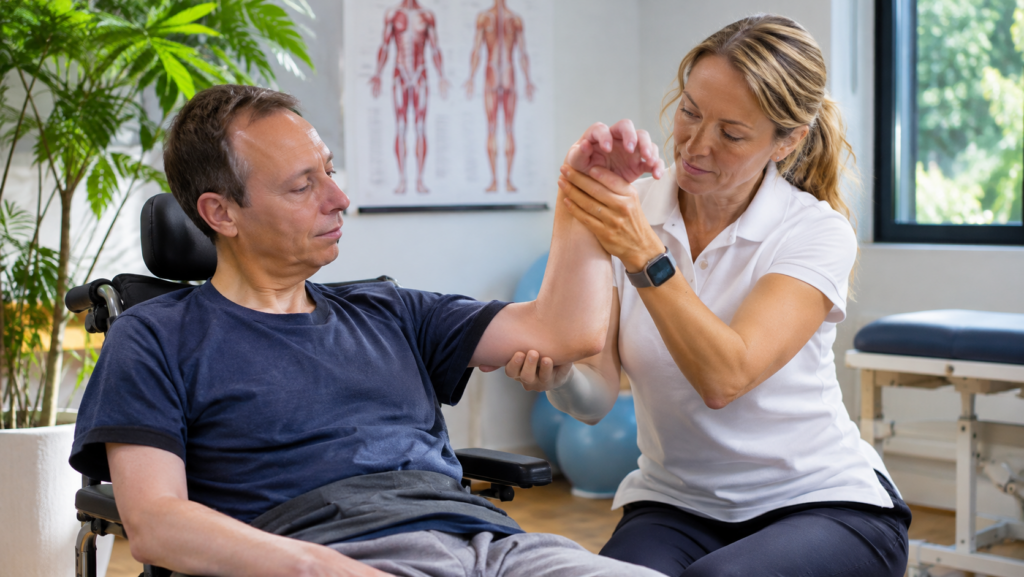
FSHD – CMA Clinical Spotlight by Dr Amrita Singh
What is facioscapulohumeral muscular dystrophy (FSHD)?
Facioscapulohumeral muscular dystrophy (FSHD) is a rare, inherited neuromuscular condition that causes progressive weakness and wasting of skeletal muscles, particularly those of the face, shoulders, shoulder blades, and upper arms. It belongs to a group of genetic conditions known as muscular dystrophies, which affect muscle strength and function over time. Although FSHD is rare, it is one of the most common forms of muscular dystrophy, according to Muscular Dystrophy UK.
The name facioscapulohumeral describes the muscle groups most commonly affected: facio refers to the face, scapulo to the shoulder blades, and humeral to the upper arms. Individuals may experience difficulty smiling, closing their eyes tightly, raising their arms, or performing activities that require shoulder strength. Weakness may also affect the abdominal muscles, hips, and legs as the condition progresses.
FSHD is associated with abnormal activity of the DUX4 gene, which is normally tightly regulated in skeletal muscle. In affected individuals, inappropriate DUX4 expression contributes to muscle-cell damage and progressive weakness. The condition is mainly classified into FSHD1 and FSHD2, which involve different genetic mechanisms but produce similar clinical features.
Symptoms often begin during adolescence or early adulthood, although some individuals develop symptoms in childhood, while others may remain mildly affected or have no noticeable symptoms for many years. Muscle weakness is frequently asymmetrical, meaning one side of the body may be more affected than the other.
FSHD is usually inherited in an autosomal dominant pattern, meaning one altered copy of the relevant genetic region may be sufficient to cause the condition. Both males and females can be affected, and the severity may vary considerably even among members of the same family.
Although FSHD is a lifelong progressive condition, life expectancy is generally normal, and many individuals retain mobility and independence for years. Management focuses on physiotherapy, maintaining functional movement, reducing pain and fatigue, supporting mobility, and monitoring for complications when appropriate.
Causes
Facioscapulohumeral muscular dystrophy is caused by genetic changes that affect the regulation of the DUX4 gene, which is located on chromosome 4. Normally, this gene is largely inactive in healthy adult skeletal muscles. In FSHD, genetic changes allow DUX4 to become abnormally active, contributing to muscle-cell damage, progressive weakness, and muscle wasting.
The underlying genetic changes involve a region of DNA on chromosome 4 called D4Z4. This region normally helps control DUX4 activity. When its structure or regulation is altered, DUX4 may become active in skeletal muscle cells, interfering with normal muscle function and contributing to progressive muscle degeneration.
There are two main genetic mechanisms responsible for FSHD:
1. FSHD1 – D4Z4 repeat contraction
FSHD1 accounts for approximately 95% of cases. It occurs when a repeated section of DNA called D4Z4 on chromosome 4 becomes abnormally shortened. This change, when present on a chromosome that permits DUX4 expression, allows the gene to become inappropriately active in muscle cells. The resulting muscle-cell damage contributes to progressive weakness, particularly affecting the face, shoulders, and upper arms.
2. FSHD2 – Changes in gene regulation
FSHD2 accounts for approximately 5% of cases. Instead of the characteristic D4Z4 shortening seen in FSHD1, this form usually involves genetic changes affecting the regulation of the D4Z4 region. These most commonly involve the SMCHD1 gene, although changes involving DNMT3B or LRIF1 have also been identified. These changes, together with a permissive chromosome 4 background, allow abnormal DUX4 activity and lead to muscle weakness.
Genetic inheritance is another important consideration. FSHD1 usually follows an autosomal dominant inheritance pattern, meaning an affected parent may pass the genetic change to their child. However, some individuals develop FSHD because of a new genetic change, even without a known family history. FSHD2 has a more complex inheritance pattern involving more than one genetic factor.
The severity and rate of progression can vary considerably, even among individuals within the same family. Some develop symptoms during childhood or adolescence, while others may not notice weakness until adulthood. Genetic differences influence disease expression, but they do not predict the clinical course perfectly.
Signs and symptoms
The signs and symptoms of facioscapulohumeral muscular dystrophy (FSHD) vary considerably between individuals, depending on the age of onset, muscles affected, and rate of disease progression. Symptoms often begin during adolescence or early adulthood, although they may appear in childhood or later in life. Muscle weakness typically develops gradually and is often asymmetrical, meaning one side of the body may be more affected than the other.
One of the most recognisable features is facial muscle weakness. Individuals may have difficulty smiling, whistling, puffing out their cheeks, drinking through a straw, or closing their eyes tightly. Facial expressions may appear reduced, and some people may sleep with their eyes partly open because of weakness in the muscles around the eyelids.
Weakness of the shoulder and shoulder-blade muscles is another characteristic feature. The shoulder blades may protrude unusually from the back, a finding known as scapular winging. Individuals may struggle to raise their arms above shoulder height, reach overhead, wash or brush their hair, lift objects, or perform activities requiring upper-body strength.
As the condition progresses, weakness may affect the abdominal muscles, hips, thighs, and lower legs. Some individuals develop difficulty walking, climbing stairs, rising from a seated position, or maintaining balance. Weakness of the muscles that lift the front of the foot may cause foot drop, increasing the likelihood of tripping or falling.
Muscle pain, fatigue, and reduced exercise tolerance are also commonly reported. Pain may affect the shoulders, back, neck, hips, or other weakened muscles. Changes in posture, including increased curvature of the lower back, may develop as the body compensates for muscle weakness.
In some individuals, particularly those with early-onset or more severe FSHD, additional features may include hearing impairment or abnormalities involving the blood vessels of the retina. These complications are less common but may require specialist hearing or eye assessment. Significant respiratory muscle weakness is uncommon, although breathing difficulties can occur in more advanced or severe cases.
Risk factors
The main risk factors for facioscapulohumeral muscular dystrophy (FSHD) are genetic. Unlike conditions that develop primarily because of lifestyle or environmental exposures, FSHD occurs due to inherited or newly arising genetic changes that allow abnormal activation of the DUX4 gene in skeletal muscles.
Family history is one of the most important risk factors. FSHD1 usually follows an autosomal dominant inheritance pattern, meaning that an affected parent has a 50% chance of passing the disease-associated genetic change to each child. However, inheriting the change does not necessarily mean that symptoms will develop at the same age or with the same severity as those experienced by the parent.
Changes involving the D4Z4 region on chromosome 4 are central to the development of FSHD1. Individuals with a shortened D4Z4 repeat region on a permissive chromosome 4 background may develop abnormal DUX4 activity, increasing their likelihood of developing the condition.
In FSHD2, risk is associated with genetic changes that affect the regulation of the D4Z4 region, particularly variants involving the SMCHD1 gene. Less commonly, other genes involved in epigenetic regulation may contribute. FSHD2 generally requires a combination of genetic factors rather than a single altered gene.
Some individuals develop FSHD because of a new genetic change, meaning there may be no previous family history. Therefore, the absence of affected relatives does not completely exclude the possibility of FSHD.
Sex and age can influence how the condition presents, although both males and females can develop FSHD. Symptoms may become noticeable during childhood, adolescence, or adulthood. Some studies suggest that males may experience earlier or more pronounced muscle weakness, but disease severity remains highly variable between individuals.
Lifestyle factors such as diet, physical inactivity, emotional stress, or previous injury do not cause FSHD. However, these factors may influence general muscle conditioning, fatigue, mobility, and how an individual manages an existing condition. Genetic counselling and testing may be helpful for affected families, particularly when considering inheritance and future family planning.
Types and classifications
Facioscapulohumeral muscular dystrophy is primarily classified into two genetic types: FSHD1 and FSHD2. Both forms cause progressive muscle weakness, particularly affecting the face, shoulders, upper arms, and sometimes the trunk and lower limbs. Although their underlying genetic mechanisms differ, their clinical features are often similar.
1. FSHD Type 1 (FSHD1)
FSHD1 is the most common form, accounting for approximately 95% of cases. It occurs when a repeated DNA region known as D4Z4 on chromosome 4 becomes abnormally shortened. This change allows inappropriate activation of the DUX4 gene, contributing to muscle-cell damage and progressive weakness.
FSHD1 usually follows an autosomal dominant inheritance pattern, meaning an affected parent has a 50% chance of passing the genetic change to each child. However, the age of onset, severity, and progression can vary considerably, even within the same family.
2. FSHD Type 2 (FSHD2)
FSHD2 accounts for approximately 5% of cases. Unlike FSHD1, it is generally associated with changes in genes that regulate the D4Z4 region, particularly SMCHD1, and less commonly DNMT3B or LRIF1. These changes affect normal gene regulation and allow abnormal DUX4 activity in skeletal muscle cells.
FSHD2 has a more complex inheritance pattern involving multiple genetic factors. Clinically, it can resemble FSHD1, with facial weakness, scapular winging, difficulty raising the arms, and progressive involvement of other muscle groups.
FSHD may also be described according to its age of onset and clinical severity, although there is no single universally applied stage system comparable to cancer staging.
3. Early-onset or childhood-onset FSHD
Early-onset FSHD refers to symptoms developing during childhood. Some individuals develop facial weakness at a very young age, followed by shoulder or limb weakness. Earlier onset may be associated with more pronounced muscle involvement and a greater likelihood of complications, including hearing or retinal abnormalities.
4. Adult-onset FSHD
Adult-onset FSHD is more commonly recognised during adolescence or adulthood. Symptoms may begin gradually, often with shoulder weakness, scapular winging, difficulty raising the arms, or reduced facial muscle movement. Progression is usually slow, although the pattern and severity differ between individuals.
5. Mild or minimally symptomatic FSHD
Some individuals experience only mild muscle weakness or have very few noticeable symptoms. They may retain normal mobility and independence for many years. In certain cases, a person may carry the genetic changes associated with FSHD without developing obvious clinical symptoms.
6. Progressive or more severe FSHD
In more severe cases, muscle weakness extends beyond the face and shoulders to involve the trunk, hips, and lower limbs. Individuals may develop foot drop, difficulty walking, postural changes, fatigue, chronic pain, or increasing mobility limitations. Some eventually require walking aids or wheelchair support.
Clinical severity may be assessed using specialist tools that evaluate the distribution and extent of muscle weakness, functional ability, and progression over time.
Complications
Facioscapulohumeral muscular dystrophy can lead to several complications as muscle weakness progresses over time. The severity and rate of progression vary considerably between individuals. Some people experience mild weakness and remain independent throughout life, while others develop increasing physical limitations that affect mobility, posture, daily activities, and quality of life.
One of the most common complications is progressive muscle weakness and reduced mobility. Weakness affecting the shoulders, upper arms, abdominal muscles, hips, and lower limbs may make it difficult to lift objects, raise the arms, climb stairs, walk long distances, or rise from a seated position. In more advanced cases, walking aids, ankle-foot orthoses, or wheelchair support may become necessary.
Scapular winging and postural changes are characteristic complications of FSHD. Weakness of the muscles surrounding the shoulder blades may cause them to protrude from the back, affecting shoulder stability and arm movement. Weakness of the abdominal and trunk muscles may also contribute to excessive curvature of the lower spine, known as lumbar lordosis, and difficulties maintaining posture.
Many individuals experience chronic muscle pain and fatigue, which may affect physical activity, sleep, concentration, and daily functioning. Pain may involve the shoulders, neck, back, hips, or other affected muscles, while fatigue can make routine activities more demanding.
Weakness in the lower limbs may lead to foot drop, balance difficulties, and an increased risk of falls. Some individuals may develop reduced ankle stability or difficulty lifting the front of the foot while walking, increasing the likelihood of tripping and injury.
Respiratory complications are uncommon in most people with FSHD but may develop in more severe or advanced cases, particularly when respiratory muscles become weakened. This may lead to reduced breathing efficiency, sleep-related breathing difficulties, or the need for specialist respiratory monitoring and support.
Less commonly, FSHD may be associated with hearing impairment and retinal blood vessel abnormalities, particularly in individuals with early-onset or more severe disease. Significant retinal abnormalities may occasionally affect vision, making hearing and ophthalmological assessment important in selected cases.
FSHD can also have psychological and social complications. Progressive weakness, changes in facial expression, visible scapular winging, reduced physical ability, chronic pain, and fatigue may affect self-esteem, confidence, relationships, education, employment, independence, and emotional wellbeing. Some individuals may experience frustration, anxiety, low mood, or concerns about future mobility.
Less commonly, swallowing difficulties and eye-surface problems may occur. Weakness affecting swallowing muscles can increase the risk of choking or aspiration, while incomplete eyelid closure may cause eye dryness or irritation. These symptoms should be assessed when present.
Prognosis
The prognosis of facioscapulohumeral muscular dystrophy (FSHD) varies considerably between individuals, depending on the age of symptom onset, severity of muscle weakness, extent of muscle involvement, genetic factors, and rate of progression. FSHD is generally a slowly progressive condition, although some individuals experience periods of relative stability followed by more noticeable deterioration.
Many individuals with FSHD retain the ability to walk and carry out daily activities for several decades. However, progressive weakness affecting the shoulders, trunk, hips, and lower limbs may gradually limit mobility and independence. Approximately 20% of affected individuals eventually require wheelchair support, although this varies with disease severity and age of onset.
The outlook is often more favourable in individuals who develop symptoms during adolescence or adulthood and experience relatively mild muscle involvement. Early-onset FSHD, particularly when symptoms begin in childhood, may be associated with more severe weakness, faster progression, and a greater likelihood of complications involving hearing, vision, or respiratory function.
Life expectancy is generally considered normal for most people with FSHD, particularly when respiratory involvement is absent. However, severe early-onset cases and individuals with significant respiratory complications may have a less favourable outlook.
Although there is currently no established cure for FSHD, appropriate multidisciplinary care can help preserve physical function and improve quality of life. Physiotherapy, individualised exercise, occupational therapy, orthotic support, pain management, and mobility aids may help individuals remain active and independent for longer. Selected individuals may also benefit from specialist interventions for severe scapular winging or other functional limitations.
Long-term monitoring is important, particularly when muscle weakness becomes more pronounced or when symptoms suggest respiratory difficulties, hearing impairment, or retinal abnormalities. Psychological support may also help individuals manage uncertainty, chronic pain, fatigue, changes in physical ability, and concerns about future independence.
Nutritional perspective
Nutrition plays a supportive role in facioscapulohumeral muscular dystrophy (FSHD) by helping to maintain adequate energy intake, muscle health, bone strength, healthy body weight, and overall wellbeing. Although dietary changes cannot correct the underlying genetic cause or stop disease progression, appropriate nutrition can help support general health and physical function alongside rehabilitation and multidisciplinary care.
Adequate protein intake is important for maintaining existing muscle tissue and supporting normal tissue repair. Protein-rich foods such as lentils, beans, pulses, eggs, dairy products, fish, lean meat, tofu, nuts, and seeds may help meet nutritional requirements. However, increasing protein intake beyond normal requirements has not been shown to reverse muscle weakness caused by FSHD.
Maintaining a healthy body weight is particularly important because excess body weight may place additional strain on weakened muscles and joints, making walking, climbing stairs, maintaining posture, and performing daily activities more difficult. Conversely, unintentional weight loss or inadequate nutritional intake may contribute to reduced strength, fatigue, and loss of muscle mass.
Bone health should also be considered, particularly in individuals with reduced mobility or limited weight-bearing activity. Adequate calcium and vitamin D intake supports bone maintenance, while suitable physical activity may help preserve bone strength. Food sources include dairy products, fortified foods, leafy green vegetables, and other calcium-rich foods. Vitamin D supplementation may be appropriate when deficiency is identified.
A balanced dietary pattern containing fruits, vegetables, whole grains, healthy fats, and sufficient protein can provide nutrients needed for general health. Omega-3 fatty acids, antioxidants, and vitamins contribute to normal physiological functions, although there is currently insufficient evidence that specific nutrients or anti-inflammatory diets can prevent or slow FSHD progression.
Hydration and regular meals may help support daily energy, concentration, and physical comfort. Individuals experiencing significant fatigue may benefit from practical meal planning, accessible food preparation, and nutritional strategies that reduce unnecessary physical exertion.
In individuals with more advanced FSHD, swallowing or chewing difficulties, although uncommon, may affect nutritional intake. Where these symptoms occur, assessment by a speech and language therapist and dietitian may be needed to ensure safe swallowing, suitable food textures, and adequate nourishment.
Research has explored the possible roles of antioxidants, creatine, omega-3 fatty acids, and other nutritional supplements in FSHD. However, evidence remains limited, and no specific supplement or dietary intervention has been established as an effective treatment for slowing the underlying disease.
Homeopathic perspective
From a homeopathic perspective, facioscapulohumeral muscular dystrophy (FSHD) may be approached through individualised, whole-person care, considering the individual’s physical symptoms, emotional wellbeing, general constitution, and ability to adapt to a progressive neuromuscular condition. As FSHD is an inherited genetic disorder, homeopathic care cannot correct the underlying genetic changes and should be considered complementary to specialist neurological care.
Homeopathic assessment is highly individualised. Attention may be given to the distribution and progression of muscle weakness, facial muscle involvement, shoulder instability, scapular winging, fatigue, muscle pain, postural changes, mobility difficulties, sleep patterns, and general energy levels. The practitioner may also explore whether discomfort is influenced by movement, rest, physical exertion, temperature, emotional stress, or daily activities.
The wider constitutional picture may include appetite, digestion, sleep quality, sensitivity to environmental changes, emotional responses, family history, and general wellbeing. Particular attention may be given to how the individual experiences physical limitations, fatigue, chronic discomfort, and changes in independence or daily functioning.
The psychological and emotional aspects of FSHD are also important. Progressive muscle weakness, altered facial expressions, visible changes in posture, difficulty performing everyday activities, and uncertainty about future mobility may contribute to frustration, anxiety, reduced confidence, or emotional distress. A homeopathic consultation may provide an opportunity to explore these experiences through attentive listening and compassionate support.
Within a complementary framework, homeopathic consultations may aim to support comfort, emotional resilience, coping, confidence, and overall quality of life. However, there is currently no reliable clinical evidence that homeopathic remedies can slow FSHD progression, restore damaged muscle tissue, or improve muscle strength beyond established care.
A holistic approach should therefore work alongside neurological monitoring, physiotherapy, occupational therapy, individualised exercise, nutritional support, pain management, mobility assistance, and psychological care. Specialist assessment remains important if individuals develop significant mobility deterioration, swallowing difficulties, respiratory symptoms, or other complications.
Psychological perspective
Facioscapulohumeral muscular dystrophy can have a significant psychological and emotional impact, particularly because it is a lifelong, progressive condition that may affect muscle strength, physical appearance, mobility, independence, and daily functioning. Individuals may experience anxiety, frustration, sadness, low mood, reduced confidence, or uncertainty about the future, especially as physical abilities change over time.
One of the distinctive psychological challenges of FSHD is the involvement of the facial muscles. Weakness affecting smiling, facial expressions, and eye closure may influence how individuals communicate emotions and interact socially. Others may misinterpret reduced facial expression as disinterest or lack of emotion, potentially contributing to embarrassment, misunderstanding, self-consciousness, or social withdrawal.
Progressive shoulder and limb weakness may also affect independence and self-esteem. Difficulty raising the arms, lifting objects, climbing stairs, walking long distances, or carrying out personal care activities can create frustration and a sense of reduced control. Visible changes such as scapular winging, altered posture, or the use of mobility aids may further affect body image and confidence.
Chronic muscle pain, fatigue, and reduced exercise tolerance may contribute to emotional exhaustion, irritability, poor concentration, sleep disturbances, and reduced participation in work, education, relationships, and social activities. These challenges can become particularly distressing when symptoms are unpredictable or gradually progressive.
The genetic nature of FSHD may introduce additional emotional concerns. Individuals may worry about passing the condition to their children, the possibility of other family members being affected, and uncertainty surrounding future disease progression. Genetic counselling can help individuals and families understand inheritance patterns and make informed reproductive decisions.
Psychological support may include counselling, cognitive behavioural strategies, stress management, emotional reassurance, peer support, family education, and practical coping techniques. Supporting realistic goals, maintaining meaningful activities, encouraging independence, and adapting daily routines may help individuals manage emotional distress and preserve their sense of identity.
A whole-person approach recognises that FSHD affects more than physical muscle function. Emotional wellbeing, body image, relationships, social participation, family concerns, and confidence should be considered alongside neurological monitoring, physiotherapy, occupational therapy, nutritional support, and rehabilitation.
Summary
Facioscapulohumeral muscular dystrophy (FSHD) is a rare, inherited neuromuscular condition that causes progressive weakness and wasting of skeletal muscles, particularly those affecting the face, shoulder blades, and upper arms. As the condition progresses, muscle weakness may also involve the trunk, hips, and lower limbs, affecting mobility, posture, and independence.
FSHD is caused by genetic changes that allow abnormal activation of the DUX4 gene, leading to muscle-cell damage and progressive weakness. The two main genetic forms are FSHD1 and FSHD2. FSHD1 is the most common and is associated with shortening of the D4Z4 repeat region on chromosome 4, while FSHD2 involves changes in genes that regulate DUX4 expression. FSHD1 usually follows an autosomal dominant inheritance pattern, although new genetic changes can occur without a family history.
Common signs and symptoms include facial muscle weakness, difficulty smiling or closing the eyes tightly, scapular winging, difficulty raising the arms, muscle pain, fatigue, foot drop, postural changes, and reduced mobility. Muscle weakness is often asymmetrical, meaning one side of the body may be more affected than the other.
The main risk factors are genetic susceptibility, family history, and inherited or newly occurring changes affecting DUX4 regulation. FSHD may begin in childhood, adolescence, or adulthood, with early-onset cases sometimes associated with greater severity. Complications may include progressive mobility limitations, chronic pain, fatigue, falls, reduced independence, and, less commonly, respiratory weakness, hearing impairment, retinal abnormalities, and swallowing difficulties.
The prognosis varies considerably between individuals, but FSHD generally follows a slowly progressive course, and life expectancy is usually normal. Many individuals retain mobility and independence for years, although some may eventually require mobility aids or wheelchair support.
A comprehensive approach includes neurological monitoring, physiotherapy, occupational therapy, individualised exercise, nutritional support, pain management, psychological care, genetic counselling, and complementary whole-person support. Although there is currently no established cure, appropriate multidisciplinary management can help preserve function, address complications, support emotional resilience, and improve long-term quality of life.
You can explore more condition guides on our medical conditions page. If you are looking for compassionate, qualified support alongside your medical care – whether nutritional, homeopathic, psychological or another discipline – you can search the CMA Practitioner directory or meet our senior Practising Fellows. Not sure which approach is right for you? Our guide on how to choose the right complementary therapy for you is a helpful place to start.
Reflective Practice – CPD
Take 20–30 minutes to reflect on how this Clinical Spotlight relates to your own practice, whatever your discipline.
- If a client mentioned one-sided shoulder weakness, difficulty raising their arms, trouble whistling or drinking through a straw, or frequent tripping, would I recognise that this pattern may need neurological assessment – and how would I raise it without causing alarm?
- How would I adapt what I offer to someone with FSHD – for example, positioning, session length, pacing, and any exercise or movement advice – so that it respects their weakness, pain and fatigue and fits with the guidance from their physiotherapist?
- Reduced facial expression can be mistaken for disinterest or low mood. How much do I rely on a client’s face to judge how they are feeling or how a session is going, and how could I check in more directly?
- Which changes would prompt me to encourage a client to contact their medical team – such as new swallowing difficulties, breathlessness, unrefreshing sleep, morning headaches, changes in vision or hearing, or falls – and do I know how to make that referral clear and timely?
- How do I describe what my discipline can and cannot do for a progressive genetic condition? Could I talk honestly about comfort, coping and quality of life without implying that I can slow progression or restore muscle?
- How would I support someone who is worried about passing FSHD on to their children or about their future independence – and do I have up-to-date details for genetic counselling, peer support and specialist organisations to signpost?
One change I will make to my practice as a result of this reflection: ____________________________________________
CPD tip: Log the time you spend reading this article and working through these questions in your CPD record, together with the date and your written reflections. Your notes are valuable evidence of reflective learning.
References
Fecek, C., & Emmady, P. D. (2023). Facioscapulohumeral muscular dystrophy. In StatPearls. StatPearls Publishing. https://www.ncbi.nlm.nih.gov/books/NBK559028/
Mul, K. (2022). Facioscapulohumeral muscular dystrophy. Continuum, 28(6), 1735–1751. https://doi.org/10.1212/CON.0000000000001155
Muscular Dystrophy Association. (2026). Facioscapulohumeral muscular dystrophy (FSHD). https://www.mda.org/disease/facioscapulohumeral-muscular-dystrophy
Muscular Dystrophy UK. (2025). Facioscapulohumeral muscular dystrophy (FSHD). https://www.musculardystrophyuk.org/conditions/a-z/facioscapulohumeral-muscular-dystrophy-fshd/
National Library of Medicine. (n.d.). Facioscapulohumeral muscular dystrophy. MedlinePlus Genetics. https://medlineplus.gov/genetics/condition/facioscapulohumeral-muscular-dystrophy/
NHS inform. (n.d.). Facioscapulohumeral muscular dystrophy (FSHD). https://www.nhsinform.scot/illnesses-and-conditions/brain-nerves-and-spinal-cord/muscular-dystrophy/facioscapulohumeral-muscular-dystrophy-fshd
Preston, M. K., & Wang, L. H. (2025). Facioscapulohumeral muscular dystrophy. In GeneReviews®. University of Washington, Seattle. https://www.ncbi.nlm.nih.gov/books/NBK1443/
About the Author
Amrita Singh is a qualified Homoeopath, Psychologist, and Nutritionist with a multidisciplinary background in psychological wellbeing, nutrition, and complementary healthcare. She holds an MSc in Psychology (UK) and an MSc in Food, Nutrition & Dietetics (India), alongside formal training in classical homoeopathy from the Central College of Homoeopathy, London. She is currently pursuing postgraduate studies with the Irish School of Homoeopathy.
Her professional interests include PTSD, intimacy, and psychosexual health, supported by continuing professional development in sexual health, kink-aware practice, pelvic health, and sexual function. Her recent training includes Understanding Kink with Dominic Davies, for which she completed 3 CPD hours and received a Certificate of Completion.
A Full Member of The Complementary Medical Association (MCMA) and Homoeopathy International (R. Hom. Int.), a Graduate Member of the British Psychological Society, and insured through Balens, Amrita brings together psychological understanding, nutritional support, and individualised homoeopathic care within a whole-person approach.
Formerly Head of Department at RMCH&RC, she now works with clients internationally and runs two physical clinics in Meerut City, Uttar Pradesh, and Ambala Cantt., Haryana, India. Her work is centred on compassionate, person-centred care that recognises the interconnected roles of emotional wellbeing, physical health, nutrition, and lifestyle.
Amrita Singh
Homoeopath, Psychologist & Nutritionist
Lic; ISH Advanced Homeopathic Therapeutics (Ireland) | Level 7 Psychology (England) | MSc Food, Nutrition & Dietetics (India)
MCMA | R. Hom. Int. (Balens Insured) | GMBPsS
Email: [email protected]
Website: amritasingh.co.uk
Instagram: @uk_clinic.amritasingh
Facebook: Amrita Singh on Facebook
United Kingdom