
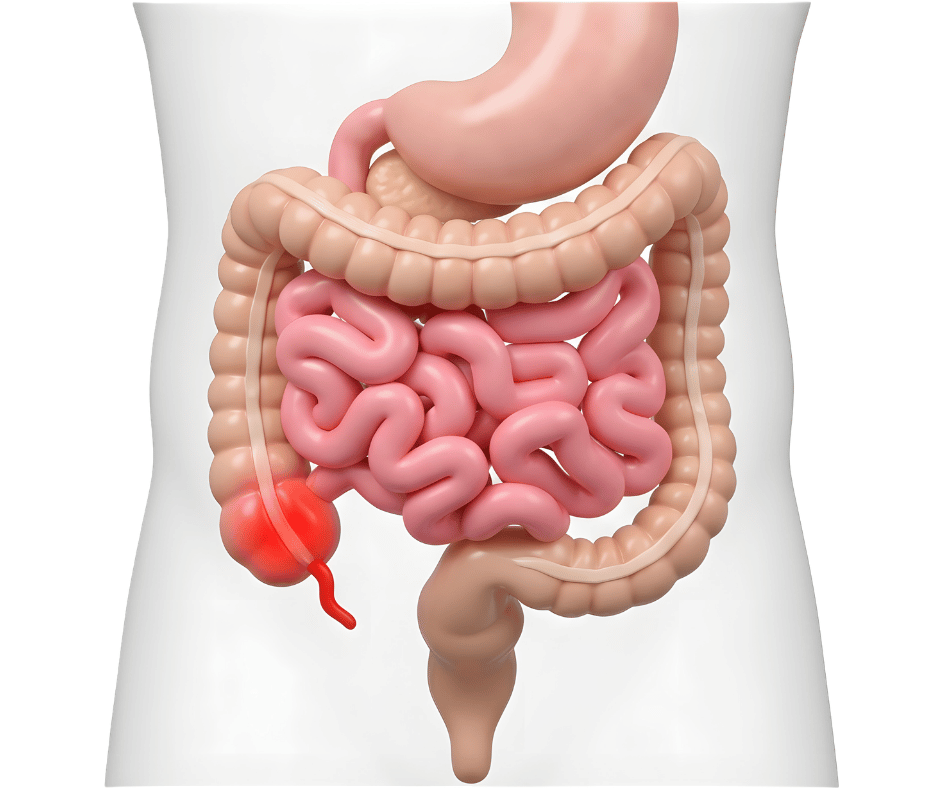
Appendicitis CMA Clinical Spotlight by Dr Amrita Singh
About This Article
In this week’s CMA Clinical Spotlight, regular contributor Amrita Singh – Homoeopath, Psychologist and Nutritionist – turns her multidisciplinary lens on appendicitis: a condition every practitioner needs to be able to recognise, because it is a genuine medical emergency that can present in our clinics before it ever reaches a hospital. Amrita walks through the causes, signs and symptoms, risk factors, stages and complications, then explores the supportive nutritional, psychological and homeopathic perspectives that come into play during recovery – always within the essential frame that suspected appendicitis requires urgent medical assessment first. This is exactly the kind of clinical literacy that sets CMA practitioners apart: knowing what we can support, knowing what we must refer, and knowing the difference immediately. This article is valued at one hour of CMA CPD.
What is appendicitis?
Appendicitis is inflammation of the appendix, a small, finger-shaped pouch attached to the first part of the large intestine. It usually develops when the opening of the appendix becomes blocked, causing swelling, irritation, infection, and increasing pressure inside the appendix (NHS, 2019; Mayo Clinic, 2025).
Appendicitis often begins with pain around the middle of the abdomen, which later moves to the lower right side. The pain usually becomes more constant and severe over time and may be accompanied by nausea, vomiting, loss of appetite, fever, constipation, or diarrhoea (Cleveland Clinic, 2020).
Appendicitis is considered a medical emergency because an inflamed appendix can burst if not treated promptly. A ruptured appendix can spread infection inside the abdomen and lead to serious complications such as peritonitis or abscess formation (NHS, 2019).
Although appendicitis can occur at any age, it is most commonly seen in children, teenagers, and young adults. Early recognition and timely medical assessment are important for preventing complications and improving outcomes (Harvard Health Publishing, 2016).
Causes
Appendicitis usually occurs when the inside of the appendix becomes blocked, leading to swelling, inflammation, and infection. Once blocked, bacteria can multiply inside the appendix, causing pressure to build up and reducing blood flow to the tissue (NHS, 2019; Mayo Clinic, 2025).
One common cause is blockage by hardened stool, sometimes called a faecolith or appendicolith. This can obstruct the opening of the appendix and trigger inflammation (Cleveland Clinic, 2020).
Appendicitis may also be linked to swelling of lymph tissue in the appendix, often following a gastrointestinal or viral infection. This swelling can narrow or block the appendix and allow infection to develop (NHS, 2019).
Less commonly, appendicitis may be caused by intestinal worms, foreign material, tumours, or trauma, although these are rarer causes. In many cases, the exact reason for the blockage is not clearly identified (Harvard Health Publishing, 2016).
If the blockage and inflammation continue, pressure inside the appendix may increase until the appendix becomes damaged or ruptures. This is why appendicitis requires prompt medical assessment and treatment (NHS, 2019; Mayo Clinic, 2025).
Signs and symptoms
The signs and symptoms of appendicitis often begin gradually but can worsen quickly. A typical early symptom is pain around the middle of the abdomen or near the belly button, which later moves to the lower right side of the abdomen. This pain usually becomes more constant, sharper, and more severe over time (NHS, 2019; Mayo Clinic, 2025).
The pain may worsen with movement, coughing, walking, deep breathing, or pressing on the abdomen. Some individuals may find it difficult to stand upright or move comfortably because of increasing abdominal tenderness (Cleveland Clinic, 2020).
Other common symptoms include loss of appetite, nausea, vomiting, fever, bloating, constipation, or diarrhoea. Some people may also feel generally unwell or notice that abdominal pain becomes progressively worse over several hours (NHS, 2019).
In some cases, symptoms may be less typical, especially in young children, older adults, pregnant women, or people whose appendix lies in an unusual position. Pain may be felt in different parts of the abdomen, back, or pelvis, which can make diagnosis more difficult (Harvard Health Publishing, 2016).
If the appendix bursts, symptoms may suddenly worsen and may include severe abdominal pain, high fever, chills, increasing abdominal swelling, and signs of serious infection. Because appendicitis can progress to rupture, persistent or worsening abdominal pain should be assessed urgently (NHS, 2019; Mayo Clinic, 2025).
Risk factors
Several factors may increase the likelihood of developing appendicitis, although it can occur in anyone and often develops without a clearly identifiable cause. The condition is most commonly linked to blockage of the appendix, followed by inflammation and infection (NHS, 2019; Mayo Clinic, 2025).
Age is one of the main risk factors. Appendicitis can occur at any age, but it is most commonly seen in children, teenagers, and young adults, particularly between the ages of 10 and 30 (Cleveland Clinic, 2020).
A family history of appendicitis may slightly increase risk, suggesting that genetic or shared environmental factors may play a role in some cases (Mayo Clinic, 2025).
Previous or recent gastrointestinal infections may also contribute, as infection can cause swelling of lymph tissue in the appendix, increasing the chance of blockage and inflammation (NHS, 2019).
Blockage by hardened stool, faecoliths, parasites, or other material may increase the risk of appendicitis by obstructing the appendix and allowing bacteria to multiply (Harvard Health Publishing, 2016). Although diet has been discussed in relation to bowel health, appendicitis is not usually caused by one specific food or lifestyle factor.
Types / stages
Appendicitis is not usually graded in the same way as some injuries or cancers, but it may be described according to severity, progression, and whether complications have developed (NHS, 2019; Harvard Health Publishing, 2016).
- Uncomplicated appendicitis
Uncomplicated appendicitis refers to inflammation of the appendix without rupture, abscess, or widespread infection. Symptoms may include abdominal pain, nausea, vomiting, loss of appetite, and fever. Early recognition and treatment at this stage usually lead to better outcomes (Mayo Clinic, 2025; Cleveland Clinic, 2020). - Complicated appendicitis
Complicated appendicitis occurs when inflammation progresses and is associated with more serious features such as perforation, abscess formation, gangrene, or localised infection. This stage carries a higher risk of complications and usually requires urgent medical care (NHS, 2019; Harvard Health Publishing, 2016). - Ruptured or perforated appendicitis
If appendicitis is not treated promptly, the appendix may burst or perforate. This can release bacteria and infected material into the abdomen, increasing the risk of peritonitis, abscess, and sepsis. Ruptured appendicitis is a medical emergency (NHS, 2019; Mayo Clinic, 2025). - Appendiceal abscess
Sometimes, the body may try to contain infection from a perforated appendix by forming an abscess, which is a collection of pus. This may require drainage, antibiotics, and further medical or surgical management depending on the clinical situation (Cleveland Clinic, 2020; NHS, 2019). - Chronic or recurrent appendicitis
Less commonly, some individuals may experience repeated or long-standing episodes of milder appendix inflammation. Symptoms may be less typical and can come and go, making diagnosis more difficult (Cleveland Clinic, 2020).
Complications
Appendicitis can lead to serious complications if the inflammation progresses or treatment is delayed. The main concern is that the swollen appendix may become increasingly infected and eventually burst or perforate, allowing bacteria and infected material to spread inside the abdomen (NHS, 2019; Mayo Clinic, 2025).
One of the most serious complications is peritonitis, which is inflammation or infection of the lining of the abdomen. This can cause severe abdominal pain, fever, abdominal swelling, vomiting, and signs of systemic illness. Peritonitis is a medical emergency and requires urgent treatment (NHS, 2019).
Another possible complication is an appendiceal abscess, where pus collects around the infected appendix. This may occur when the body attempts to contain the infection after perforation. An abscess may require antibiotics, drainage, or further surgical management depending on severity (Cleveland Clinic, 2020).
If infection spreads into the bloodstream, appendicitis may lead to sepsis, a life-threatening systemic response to infection. Symptoms may include high fever, rapid heartbeat, confusion, low blood pressure, and worsening general condition (Harvard Health Publishing, 2016).
Delayed or complicated appendicitis may also result in longer hospital stay, increased recovery time, wound infection, bowel complications, or the need for more complex treatment. Early medical assessment and timely treatment are therefore important for reducing risks and improving outcomes (NHS, 2019; Mayo Clinic, 2025).
Prognosis
The prognosis of appendicitis is generally very good when it is recognised early and treated promptly. Most people recover well after appropriate medical or surgical management, especially when the appendix has not ruptured and there are no complications (NHS, 2019; Mayo Clinic, 2025).
In uncomplicated appendicitis, recovery is usually straightforward, and treatment is often effective in preventing further infection or rupture. Early diagnosis helps reduce the risk of complications and supports a shorter recovery period (Cleveland Clinic, 2020).
The prognosis becomes more serious if the appendix bursts or perforates, as infection can spread inside the abdomen and lead to peritonitis, abscess formation, or sepsis. In these cases, treatment may be more complex, recovery may take longer, and hospital care may be required (NHS, 2019; Harvard Health Publishing, 2016).
Children, older adults, pregnant women, or individuals with atypical symptoms may be at greater risk of delayed diagnosis, which can increase the chance of complications. However, with timely medical attention and appropriate treatment, outcomes are generally favourable (Mayo Clinic, 2025).
Nutritional perspective
Nutrition plays a limited but supportive role in appendicitis, as the condition itself is an acute medical problem that usually requires prompt medical assessment and treatment. Diet cannot treat appendicitis or prevent complications once inflammation has developed, but nutritional care may support recovery, digestion, hydration, and overall healing after medical or surgical management (NHS, 2019; Mayo Clinic, 2025).
Before treatment, individuals with suspected appendicitis may be advised to avoid eating or drinking until assessed by healthcare professionals, particularly if surgery may be required. This is because food or fluid intake can increase risks if anaesthesia or emergency procedures are needed (NHS, 2019).
After treatment, nutrition usually focuses on gradual return to normal eating, depending on the individual’s symptoms, surgical recovery, bowel function, and medical advice. Light, easily digestible foods may be preferred initially, especially if there has been nausea, vomiting, abdominal discomfort, or reduced appetite (Cleveland Clinic, 2020).
Adequate protein intake is important after surgery or infection because protein supports tissue repair, wound healing, immune function, and recovery. Sources may include pulses, lentils, beans, eggs, dairy, fish, lean meat, nuts, and seeds, depending on tolerance.
Maintaining hydration is also important, especially if there has been fever, vomiting, diarrhoea, reduced oral intake, or post-operative recovery. Fluids help support circulation, digestion, and general healing.
A balanced diet rich in fruits, vegetables, whole grains, protein, and healthy fats can support recovery and bowel regularity once the individual is medically stable. However, dietary advice should be individualised, especially after complicated appendicitis, abscess, perforation, or abdominal surgery.
Psychological perspective
Appendicitis can have a noticeable psychological and emotional impact, particularly because it often develops suddenly and may require urgent medical assessment or surgery. The rapid onset of abdominal pain, uncertainty about diagnosis, and fear of complications can lead to anxiety, distress, and emotional discomfort (NHS, 2019; Mayo Clinic, 2025).
Individuals may feel worried when pain becomes severe or shifts to the lower right side of the abdomen, especially if they are unsure whether the symptoms are serious. The possibility of emergency treatment, hospital admission, anaesthesia, or surgery can also increase fear and nervousness (Cleveland Clinic, 2020).
Children, young people, and older adults may experience additional emotional stress, particularly if symptoms are intense, communication is difficult, or hospital care feels overwhelming. Reassurance, clear explanation, and family support can help reduce distress during assessment and treatment (NHS, 2019).
After treatment, some individuals may experience frustration or low mood during recovery, especially if pain, fatigue, reduced mobility, or activity restrictions affect daily life. In complicated appendicitis, a longer recovery period may increase worry about healing, infection, or recurrence of abdominal symptoms.
Psychological support in appendicitis focuses on reassurance, clear communication, pain management, emotional comfort, and confidence during recovery. A calm, supportive approach can help individuals cope better with the acute nature of the condition and the recovery process.
Homeopathic perspective
From a homeopathic perspective, appendicitis may be viewed as an acute inflammatory condition involving the body’s digestive, immune, and local tissue response. The focus is on the individual’s overall symptom pattern, including the nature of abdominal pain, sensitivity, restlessness, feverishness, digestive changes, and emotional response to acute discomfort.
Homeopathic assessment is individualised, taking into account how the pain presents, whether it is sharp, cramping, constant, or shifting; what makes it better or worse; and whether symptoms are accompanied by nausea, vomiting, bloating, fever, anxiety, or weakness.
Because appendicitis can progress quickly and may lead to serious complications such as rupture, peritonitis, abscess, or sepsis, it requires urgent medical assessment and appropriate emergency care when suspected. Supportive approaches should never delay medical evaluation in cases of persistent or worsening abdominal pain.
Within holistic care, homeopathic support may focus on comfort, emotional reassurance, digestive recovery, and overall wellbeing, particularly during the recovery phase after medical or surgical treatment. Attention may also be given to the individual’s anxiety, fear, pain sensitivity, and confidence during healing.
Summary
Appendicitis is an acute inflammation of the appendix, usually caused by blockage inside the appendix that leads to swelling, infection, and increasing pressure. It commonly presents with abdominal pain that may begin around the middle of the abdomen and later move to the lower right side, often becoming more constant and severe over time.
Common symptoms include abdominal pain, nausea, vomiting, loss of appetite, fever, bloating, constipation, or diarrhoea. Because symptoms can sometimes be atypical, especially in children, older adults, pregnant women, or individuals with an unusually positioned appendix, prompt medical assessment is important when abdominal pain is persistent or worsening.
Appendicitis may be described as uncomplicated, complicated, ruptured or perforated, appendiceal abscess, or chronic/recurrent appendicitis. If untreated, it can lead to serious complications such as peritonitis, abscess formation, sepsis, longer recovery time, and more complex treatment needs.
The prognosis is generally very good when appendicitis is recognised early and treated promptly. However, delayed treatment increases the risk of rupture and infection spreading within the abdomen.
A comprehensive approach includes urgent medical care, appropriate treatment, nutritional support during recovery, psychological reassurance, and holistic support for comfort and wellbeing. Early recognition, timely intervention, and careful recovery support are essential for preventing complications and restoring health.
Reflective Practice – CPD Corner
Take a few minutes to reflect on the following, and record your answers in your CPD log:
- If a client mentioned abdominal pain that had started centrally and moved to the lower right side, how quickly would I recognise the red flag – and exactly what would I say to them?
- Do I know the atypical presentations described in this article – in children, older adults and pregnant women – well enough to spot appendicitis when it does not follow the textbook pattern?
- What is my clear, rehearsed referral protocol when a client presents with symptoms that could indicate a medical emergency? Is it written down?
- How confident am I in explaining to a client – calmly and without alarm – why urgent medical assessment must come before any complementary support?
- Where does my modality genuinely add value in a condition like this – for example in post-treatment recovery, nutrition and emotional support – and where does it have no place?
- When did I last review my knowledge of abdominal red flags more broadly, beyond appendicitis?
One change I will make as a result of this reflection: ______________________________________
CPD logging tip: reading this article and completing this reflection counts towards your CPD. Log it under “clinical knowledge and safe practice” with the date and your key learning point.
References
Cleveland Clinic. (2020). Appendicitis: Symptoms, tests, treatment & prevention. Cleveland Clinic. https://my.clevelandclinic.org/health/diseases/8095-appendicitis
Mayo Clinic. (2025, January 18). Appendicitis – symptoms and causes. Mayo Clinic. https://www.mayoclinic.org/diseases-conditions/appendicitis/symptoms-causes/syc-20369543
Harvard Health Publishing. (2016, October 26). Appendicitis – Harvard Health. Harvard Health; Harvard Health. https://www.health.harvard.edu/a_to_z/appendicitis-a-to-z
NHS . (2019). Appendicitis. NHS. https://www.nhs.uk/conditions/Appendicitis/
Read more
Please take a look at the CMA’s excellent library of conditions, therapies and remedies via our Learn page. Please take a look at the CMA’s excellent library of conditions, therapies and remedies via our Learn About pages.
About the Author
Amrita Singh is a qualified Homoeopath, Psychologist, and Nutritionist with a strong multidisciplinary foundation in mind–body health. She holds an MSc in Psychology (UK) and an MSc in Food, Nutrition & Dietetics (India), alongside formal training in classical homoeopathy from the Central College of Homoeopathy, London. She is currently pursuing postgraduate studies with the Irish School of Homoeopathy.
A full member of the Complementary Medical Association (MCMA), Homoeopathy International (R. Hom. Int.), the British Psychological Society (Graduate Member), and Balen’s insured, Amrita integrates emotional insight, nutritional balance, and gentle homoeopathic care in her clinical approach.
Formerly the Head of Department at RMCH&RC, she now works with clients internationally & runs two physical clinics (Meerut City, Uttar Pradesh & Ambala Cantt., Haryana) in India, offering compassionate, holistic guidance that honours the interconnectedness of emotional wellbeing, physical health, and lifestyle patterns.
Contact & Credentials
Amrita Singh
Homoeopath, Psychologist & Nutritionist
Dip. CCH (England) | MSc Psychology (England) | MSc Food, Nutrition & Dietetics (India)
MCMA | R. Hom. Int. (Balen’s Insured) | GMBPsS
📧 [email protected]
🌐 https://amritasingh.co.uk/
📍 United Kingdom
Instagram – https://www.instagram.com/best_doctor.uk2025/
Facebook – https://www.facebook.com/profile.php?id=61582871564526